Where I live has come a long way. Don't get me wrong.
But, as I type out this post, I can't help but burn a little hotter these days. Why? Because of where I live. Yes, that's right. This post is about the fantastic city where I have spent my entire life and, if you know me personally, you know that it will forever be a love/hate relationship.

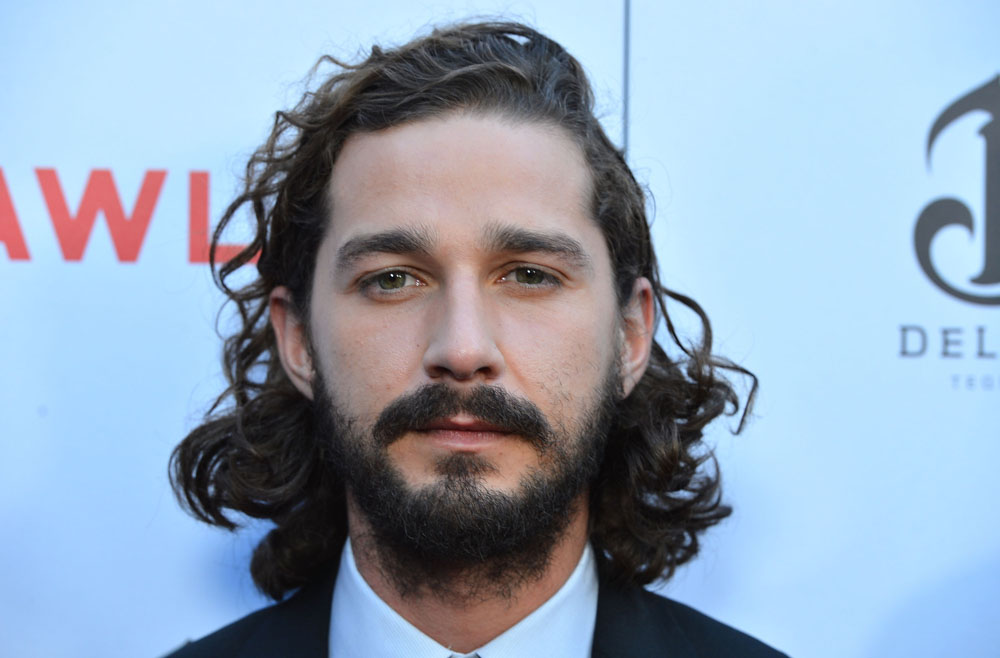
I mean, just look at this. It's as picturesque as it gets. As an outsider, I can completely see how this view could be pristine. It's not quite Podunk, but definitely not urban. It's sort of suburban, but not altogether that, either. You might look at this picture with a bit of jealousy. Summer in New England might be one of the best times of the year, yet there is an underbelly to these stretches of little cities that no one sees, that is unless you are close enough to dig into it with your fingernails. But be careful, though. You might not like what you scrape up.
Like lobster guts and crab shells spewed across your front yard.

Picture these except a lot more and broken into three million pieces.
I live on a street that is pretty well traversed. I am constantly scanning the road's edge and picking up random snags of litter here and there. It's a daily thing and I've accepted it, knowing that I'm ultimately responsible for my yard. I do take pride in my house's image, even if I let the lawn grow out a little before I cut it.
But this...this sucked. I spent a solid thirty minutes (at 7:15am, no less) hunched over with gloves, swiping at pungent, decomposing meat that someone had casually chucked out their window because they felt it was better for me to deal with their problems rather than take care of it themselves.
I felt disrespected. I was angry. I was ready to punch someone in the face.
So what does this have to do with my faith in the human race? You can probably tell, but:
Hold your horses, will ya? I'm getting there.

Hehehe, funny, isn't it?
To be honest, this isn't just about my beloved city and its great people and not-so-great people. This is ultimately about how people treat others. This is about respect.
Rewind.
I've grown up with the help of some diligent parents that kept me in line growing up, even when I wanted to rebel against them with every fiber in my body. One of the methods they used to help me understand was dialogue. They treated me like a human being who can make the right decisions for myself. One thing my dad always taught me was this:
"You are not measured by what you do while people are watching, but what you do when they aren't."
That nugget of knowledge really stuck with me. In fact, it's carried me through my years of high school punkery, college shenanigans, and now, as a husband, author, and homeowner. So why has the world fallen so far away from this mindset? How has our collective conscience strayed so far from the path that 'empathy' is no longer a word in our universal vocabulary?
Well, it starts with this:

Parenting.
Now before you all go nuts with the 'you're not a parent!' counter arguments, let me tell you what I do know.
I know full well that I am young and that, no, I do not have children, but I do know that parents are the first teachers a child will have. I know that the concept of 'nurture' is far greater in our world than 'nature'. I know that kids are greatly influenced by how their parents act, what their parents say, and the people they interact with. Kids, especially the littlest ones, are walking environmental sponges, absorbing everything and anything they can take in with their senses. The concept of parenting will never change because it's engrained into our DNA. It has a stronghold on who we are as a people and who we are as a species in this universe. Whether we choose, as parents or future parents, to adhere to these rules, is where the wagon might fall off the wheels too early.
It's hard to imagine a world where these things no longer matter. Sure, it would make a great science fiction novel (noted), but I'm 110% positive that anything other than what is described above would be counterintuitive to what good parenting should be.
And then, after years of shaping a human being, a guy like me gets a crack at it here:
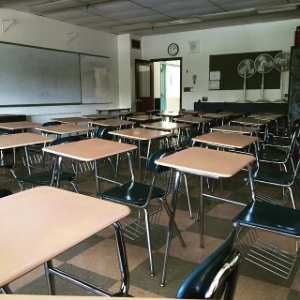
A good teacher has the ability to change lives. That's what I love best about my job. I love that it's not 9am-5pm. I love that it's an ongoing struggle. I love that I'm constantly working to make kids better, more responsible human beings. I don't like how I'm losing my hair so quickly, though. I'll admit to that. Bald spots are NOT okay.
All jokes aside, even if I took my job as literally as I possibly could, at its core I would still be teaching my classroom kiddos how to empathize. In case you don't know what this word means, check it out:
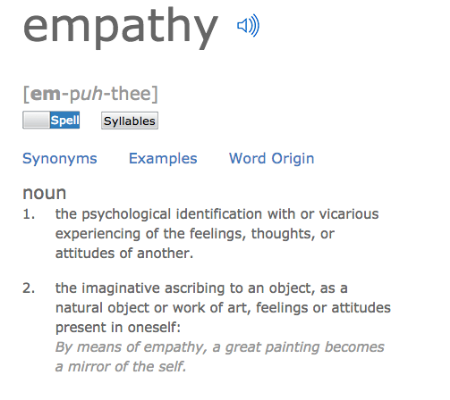
Living vicariously through someone else, you say? I know you've heard that phrase before!
If we all just try to see where other people are coming from, we may have a better understanding of why people do what they do in the first place. It may not stop all burglaries, thefts, littering, or vandalism, but I truly believe that the lessening of such things in our cities and towns can only happen if we shift our attitudes to one of empathy rather than jealousy, anger, or bitterness.
Put yourself in the shoes of the person who hurt you. Yes, you might still feel some (or a lot of) resentment, especially if whatever happened directly affected your state of being or your sense of security, but there must have been a reason...and if that reason is big enough, then you have your answer.
It starts with a mindset change in one person that spreads to others until it catches like wildfire and changes the perception of the world. Right now, especially where I call home, this perception is simply not present.
It will only change when the people change and, as our world slowly descends into a very weird and very real cyberpunk novel, I hope that people can find it within themselves to do the right thing. To be moral enough to, not only do the right thing while people are watching, but still uphold a sense of morality when they aren't.
Until next time,
R.T.
















 The book is amazing. It's one part dystopian, three parts philosophical, and ten parts ethical. It raises a million questions about the human experience and dives into the reasoning for living a fruitful life. If you want a rated "R" version of this same plot, check out Equilibrium with Christian Bale. Epic is an understatement. In terms of the movie, however, the only redeeming quality is Jeff Bridges. The protagonist, the story, and the visualization of Lois Lowry's words don't truly come to fruition and it's too bad. I was looking for more investment in the emotional despair, more elation in the moments of emotional awakening, and more disgust in the society's undertakings. Unfortunately, none of that was really present in the film. It makes the list because it's not a bad film entirely, just a predictable one. Plus, they tried way too hard to emerge Taylor Swift as an important character. Come on, The Giver, it doesn't work that way.
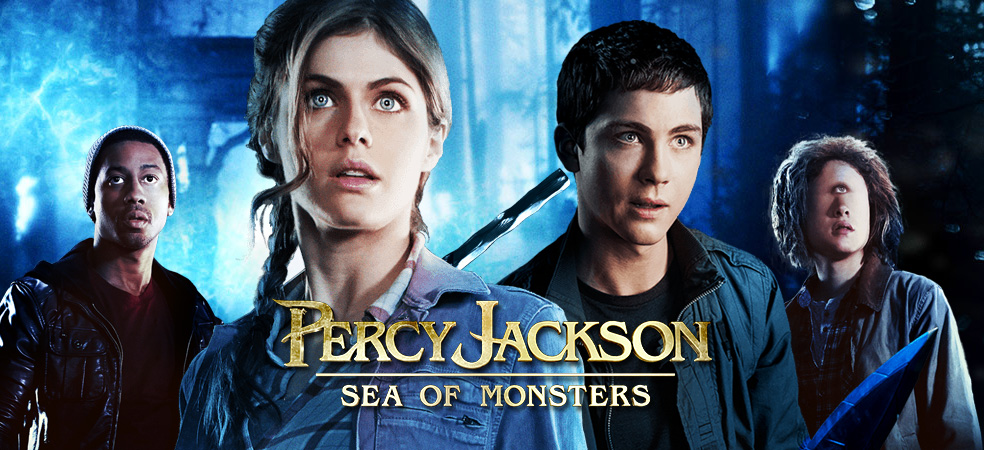 Much like The Giver, The Percy Jackson series has a lot of explaining to do cinematically. The real difference between #10 and #9 is the popularity between the two. Percy Jackson is truly Young Adult. It conceptualizes Greek Mythology in a way that moderate readers can easily attach themselves to. Not only is that difficult to do, but the first film was a brilliant one. It had me guessing. It kept me entertained. The second one, however (The Sea of Monsters), was an epic fail and one that I think the movie writers would like to have back. Suddenly, what should have been a bridge between a coming-of-age growth (Movie 1) and an immersion of a larger underbelly of plot (A potential Movie 3), devolved into a mosh of cheesy characters, a lack of well-devised god play, and a horribly underplayed villain in Cronus. Even with all of these criticisms, the Percy Jackson series still merits a #9 in the Young Adult onslaught of book-to-movie comparisons.
 Just like The Giver and The Percy Jackson series, Divergent is still in the tier of "novels that are strangely popular and do their jobs, but simply can't keep up with the mainstream ideals and requirements needed to keep the series afloat in film". Will the series continue? Probably. Should it? Meh. I wouldn't really care either way. The plot is similar to every other story we've read about in Young Adult literature, just set in an alternative dystopian setting (see The Giver, The Hunger Games, etc.). Authors need to branch out a bit more and Divergent is a prime example of just that. It's too similar to everything we've seen before, but I can't deny the power it's had on people, particularly the YA's out there, hence its rating - #8.
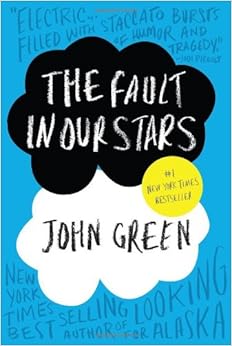 New tier alert! The Fault in Our Stars reaches the level of "I'm going to make girls cry while doing a pretty good job of enhancing the novel's initial success" of Young Adult books-gone-to-film. There's something magical about how a film can make you feel when you're watching it in the theater. There's something even more magical about having the same reaction while reading a book. The first is a communal effect. The second is a deeply personal experience. Luckily for John Green readers, The Fault in Our Stars accomplished both of these effects pretty successfully. Although I hold true to the fact that Looking For Alaska is still John Green's most powerful work to date, The Fault in Our Stars and its corresponding film are definitely worth investing time into. #7 may be a slight understatement of value here, but with the lengthy list above it, I couldn't see moving it forward any more. Read on, Read on.
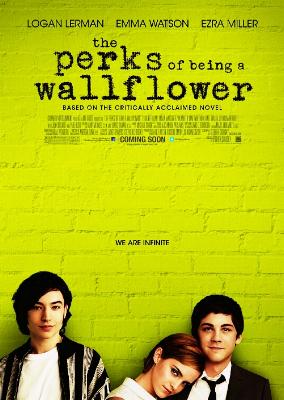 The Perks of Being a Wallflower is like The Fault in Our Stars in that it produces the same emotional response, but it's a much more controversial, coming-of-age plot. It dives into non-Young Adult themes (or YA in some circles) like sexuality, drug use, alcohol, along with other familiar Young Adult topics like popularity, discovering passion, and surviving trauma. Chbosky does a fantastic job easing his readers into the lure of YA issues, but also slaps you in the face with background information and exposure. It's one of the few novels that is also directed by the author on the big screen. And besides, Logan Lerman and Emma Watson are fantastic personalities that really allow for the characters to come alive in a very distinct way. If John Green's Looking For Alaska was a movie, The Perks of Being a Wallflower would be on the same level. It's THAT kind of novel/film. The TPOBAW film gave me chills, but then again, I watched it alone. It deserves its rating at #6...the best of the first half of ratings.
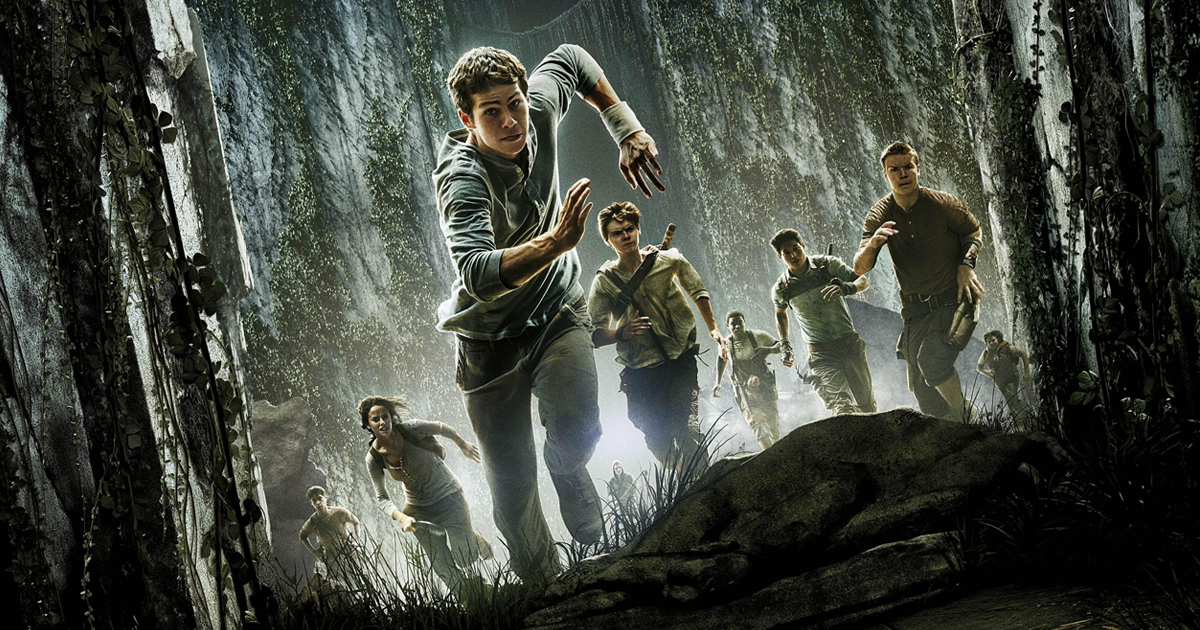 This pick may surprise you. Out of all the Young Adult movies out there, why would I choose The Maze Runner as (get this) the #5 Young Adult book-to-movie? I'll tell you why--the movie was absolutely wonderful. The Maze Runner was nothing but a mediocre novel. I'm guessing that The Scorch Trials (#2 in the series) is another work of the same average run-of-the-mill writing bleh, but the movie...the movie was a work of art. When I was listening to the audiobook, I couldn't help but believe that I was reading a male version of the Twilight series. It tried to appeal to the male workings of the brain, but failed miserably. Theresa was a below average character filled with too many loopholes. Thomas was just another conflicted, impersonal mirage of inflated beliefs. And don't even get me started on Alby...but let me tell you something, the film cleared EVERYTHING up. It narrowed Thomas, it expanded the personality of Theresa (although slightly)...and nearly eliminated Alby's character all together. Plot mechanisms were changed, but the overall story remained the same. The Maze Runner completely redid itself and, to be frank, put lipstick on a pig and turned it into a model.
 Ah, the top 4. This is where we go from the "rather emotional" to the "marginally epic". Let's be honest. The dystopian setting is not original, but it is a compelling landscape filled with political feuds that resemble our own in distant ways. Katniss is a strong, female character filled with tribulations, hard decisions, and action, while maintaining a soft underbelly of family, friends, and a strong loyalty to the land and people she loves. The movie maintains the story's justice while adding the visual effects needed to make a strong comparison to the novel's crucial details. It's one of the few Young Adult movies that maintains the genre while breaching the realm of adulthood, as well. Well done, Hunger Games. Well done.
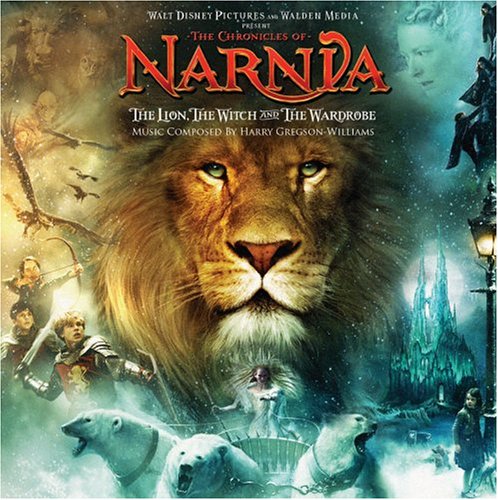 Although I'd still mark this as an "above average epic of sorts", I think that Narnia makes for an interesting reach into that "obsessively popular and clearly unavoidable" tier. Yes, it is rather childish, but if you step away and admire the storyline for what it is, you'll see that it is much more than just a children's book. It's a detailed look into the mind of an artist (C.S. Lewis, of course). The movies parallel the books and, for that, I give this bad boy #3 on the depth chart. The movies really allowed for a giant boost of new followers without taking from the writing's original plans. Plus, talking lions always seem to be a crowd favorite.
 What is that, you say? Twilight?!? Yeah, yeah. I know, but it's an unavoidable evil. I will be the first to admit that the writing is cheesy beyond belief and feels like it was written in a week, but if there ever was a "crazy obsession that never existed before its time", it's this. Vampires never would have exploded onto the scene as they did and teenage girls around the world would never have known the terms TEAM EDWARD or TEAM JACOB. It's the Justin Bieber of mainstream fiction and mainstream film, but it's worth a #2 spot simply because of its over-exaggerated popularity and breakthrough into yet another sub-genre we never thought existed. But still, vampires and humans romancing it up? GET A ROOM.
 Oh that lovable, little lightning bolt-faced boy. He's been put through the ringer at Hogwarts. That's for sure. But, in terms of world building, character development, and plot design, J.K. Rowling really outdid herself on this one. I remember the first time I ever picked up a Harry Potter novel. It was Harry Potter and the Sorcerer's Stone--a wrinkly copy in the library of my middle school. I remember thinking: Look at the cover. This book is gonna suck. Boy, was I wrong. That novel lit me up like a hormone-induced Christmas tree. It was like diving into a world unlike any other and immersing yourself in a culture and a people with a story all their own. You wanted to cry with Harry, laugh with him, stand up for him...hell, do EVERYTHING with him. And each novel got better and better because you knew, as you read, Harry was growing up...and not only growing up, but growing up with you. That, my friends, is the reason why we read. It's like Boy Meets World literary style.